

The Miracle of the Rotten Seeds — Moshav Komemiyut, 1952
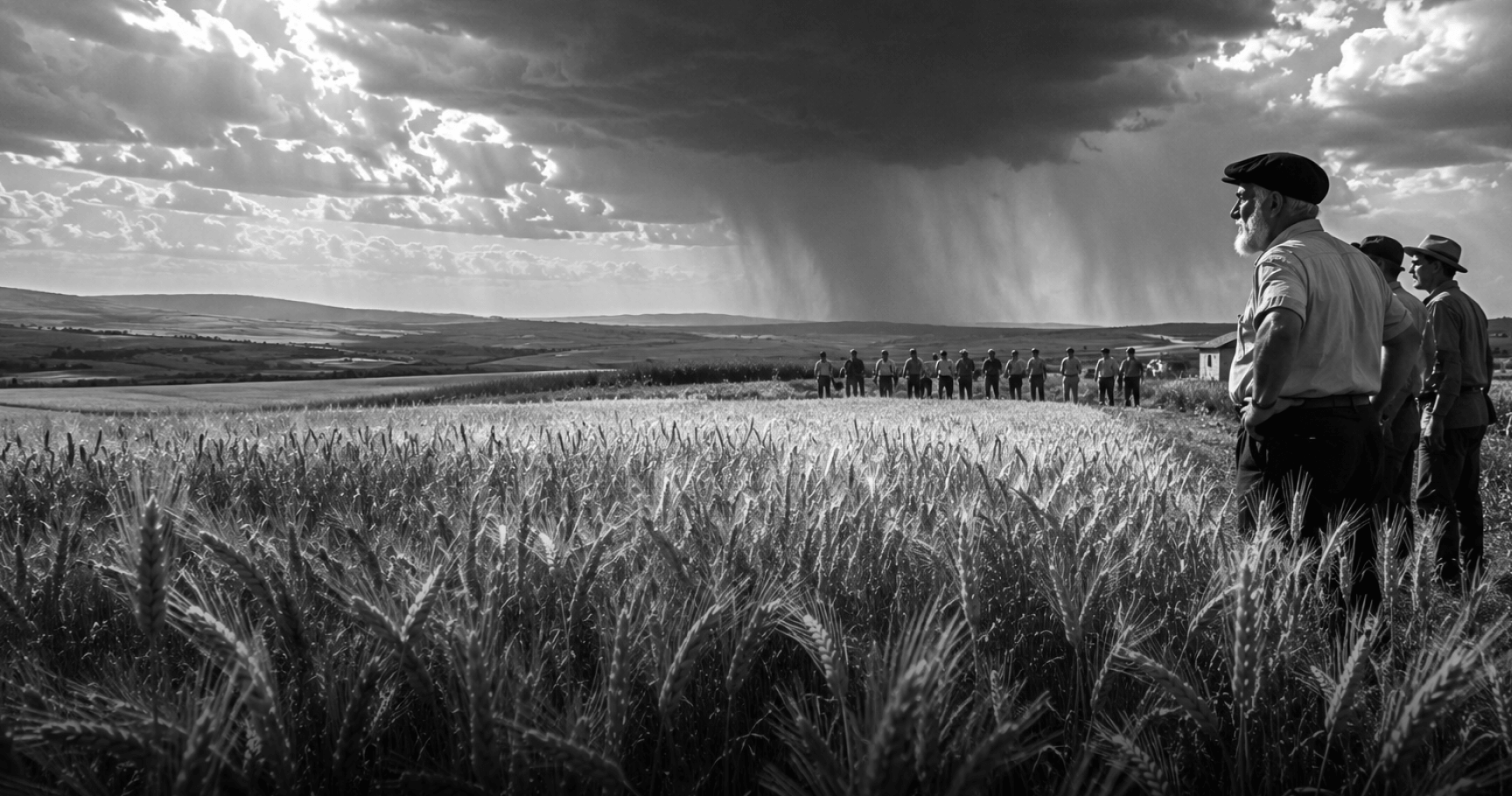
It was just after Shmitah. The farmers of Moshav Komemiyut in southern Israel needed seed to plant — but there was almost nothing left. They had refused to use any produce from the Shmitah year itself, as halacha requires. What they finally found, after searching everywhere, was a pile of old wheat sitting in a neighboring kibbutz's storehouse — broken, worm-infested, reeking of rot.
The kibbutz farmer shook his head. "Don't waste your money," he told them. "Nothing will grow from this."
They bought it anyway.
Then came another blow: Shmitah law forbade them from plowing until after Rosh Hashana — so they planted their fields two to three months later than every other farm in the region. By November, while their neighbors had long since finished planting and were waiting for the rain, Komemiyut was only just beginning.
And the rain didn't come. September passed. October passed. Farmers across the region stared at the sky. Their seeds sat in dry ground, and began to die.
The day after Komemiyut finished planting — the very next day — the skies opened.
When spring came, the fields around Komemiyut were sparse and weak. The farms that had planted on time, with good seed, had almost nothing to show for it. But Komemiyut's fields — planted late, with rotting seed — were full of tall, healthy, beautiful wheat.
Farmers came from across the region just to see it with their own eyes.
Rabbi Binyamin Mendelson, the moshav's rav, wrote simply: "That was a sign that H'shem sends His blessing to those who observe Shmitah."
Join the Circle of Sustaining Support
Be one of thousands of women providing consistent, meaningful support for Klal Yisrael. Your sustained commitment ensures these heroic, holy women can continue their sacred work with stability and strength.